
Don’t Let the Grinch Steal Your Holiday Cheer
11/23/2026
Quick Summary: Holiday scammers target shoppers wherever they spend money or expect packages, from fake shopping sites and gift card scams to phony delivery texts and porch pirates. Slow down before you click, pay, or respond, verify deals and delivery notices by going directly to the retailer or carrier, and pay with a credit card when possible. Follow a simple checklist to protect your money, information, and packages, and trust your instincts.
The holidays should be about giving, celebrating, and enjoying time with family. But unfortunately, there are some real-life Grinches out there hoping to steal more than your Christmas presents. A few simple steps can help protect you and your money this season.
Common Holiday Scams to Watch For
Who are the “Grinches” we need to watch out for during the holidays?
They don’t necessarily have green fur, but they know how to ruin your holiday.
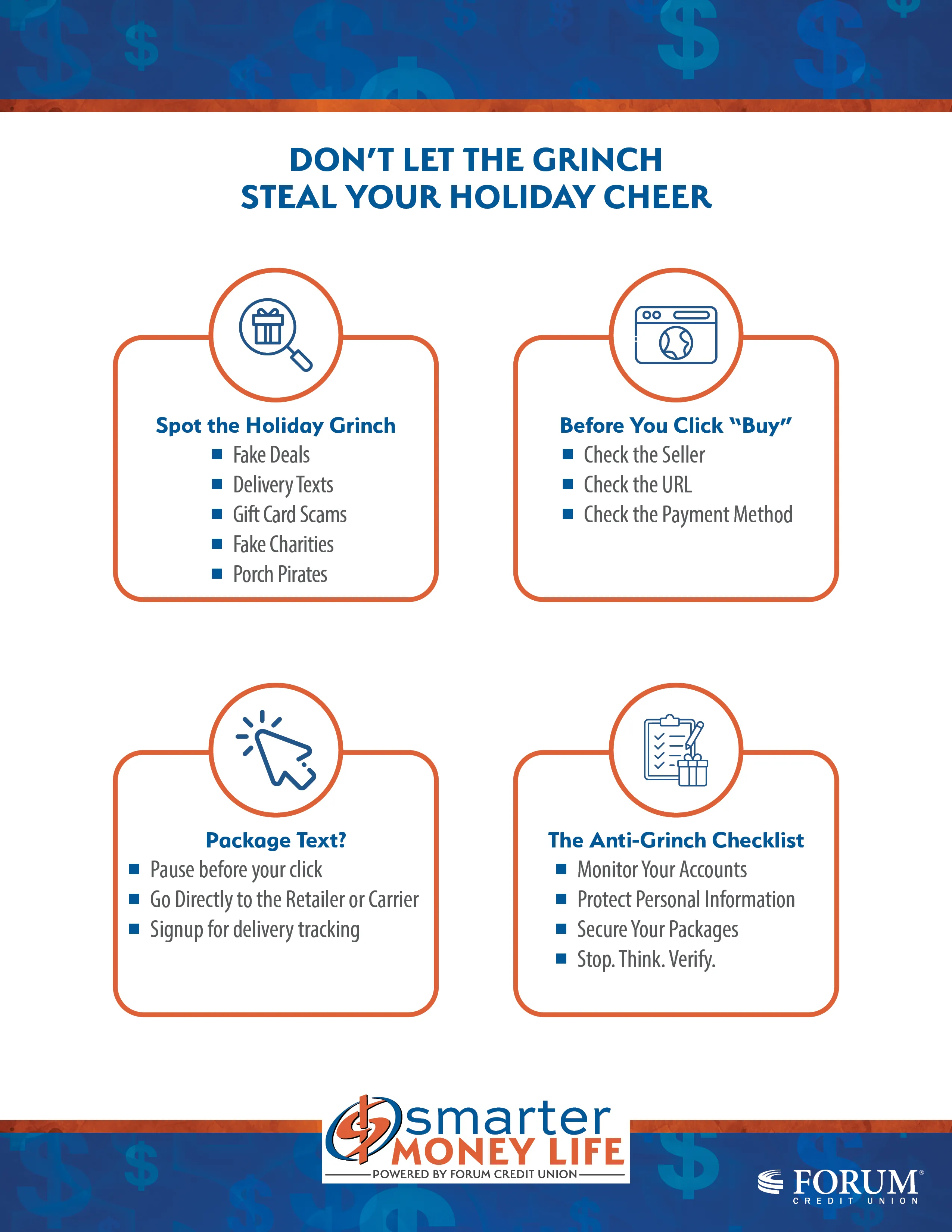
Holiday scams tend to show up wherever we're spending money or expecting packages. That can include:
- Fake shopping websites and social media ads
- Phony delivery texts claiming there’s a problem with your package
- Gift card scams
- Fake charities
- Porch pirates stealing deliveries
My biggest advice is to slow down before you click, pay, or respond. Scammers love urgency. If a message says your package is being held or you need to act immediately, don't use the link they sent you. Go directly to the retailer or delivery company yourself.
How to Spot a Legitimate Holiday Deal
Holiday deals are everywhere. How can shoppers tell if a deal is legitimate?
I like a great deal as much as anybody, but during the holidays, sometimes the best deal is the one you don't click. Be especially cautious with social media ads or emails offering a popular product at a price that's dramatically below everyone else.
Before you buy:
- Search for the retailer independently instead of clicking the ad.
- Check the website address carefully for misspellings.
- Be suspicious if the only payment choices are gift cards, wire transfers, or cryptocurrency.
- When possible, use a credit card, because it generally provides stronger protection if something goes wrong.
And remember the simplest rule: If the deal feels too good to be true, give yourself a minute before you give them your money.
Package Delivery Text and Email Scams
How can we handle the flood of package delivery texts and emails this season?
This is a really effective scam because during the holidays almost everybody is waiting on a package.
You get a text that says something like, “We couldn't deliver your package. Click here to reschedule.” You click, enter some information, and suddenly the Grinch has your personal or financial information.
Instead, don't click the link. If you're expecting a package, open the retailer's app or go directly to the official website for UPS, FedEx, or the U.S. Postal Service and enter your tracking information there.
One extra tip: sign up for delivery notifications directly through the carrier or retailer rather than trusting an unexpected text.
Your Anti-Grinch Holiday Checklist
What quick checklist can keep the Grinch from stealing our holiday cheer?
Here's my holiday anti-Grinch checklist:
First, protect your money. Review your bank and credit card accounts regularly so you can catch suspicious purchases quickly.
Second, protect your information. Don't give out passwords, verification codes, or financial information because somebody unexpectedly contacted you.
Third, protect your packages. Use delivery alerts, secure pickup locations, or have packages delivered when you know someone will be home.
And finally, trust your instincts. Scammers want you to react quickly. Taking 30 seconds to stop, think, and verify could save you a huge headache.
The goal isn't to be paranoid during the holidays. It's just to be a little more careful so the only Grinch you're dealing with is the one on TV.