
How to Spot and Avoid Frauds and Scams
10/22/2026
Quick Summary: Scams are becoming harder to spot, showing up through phone calls, texts, emails, social media, and QR codes. Learn the most common scams, the warning signs to watch for, how to use a simple Stop. Verify. Protect. approach with suspicious messages, and what steps to take right away if you think you have been scammed.
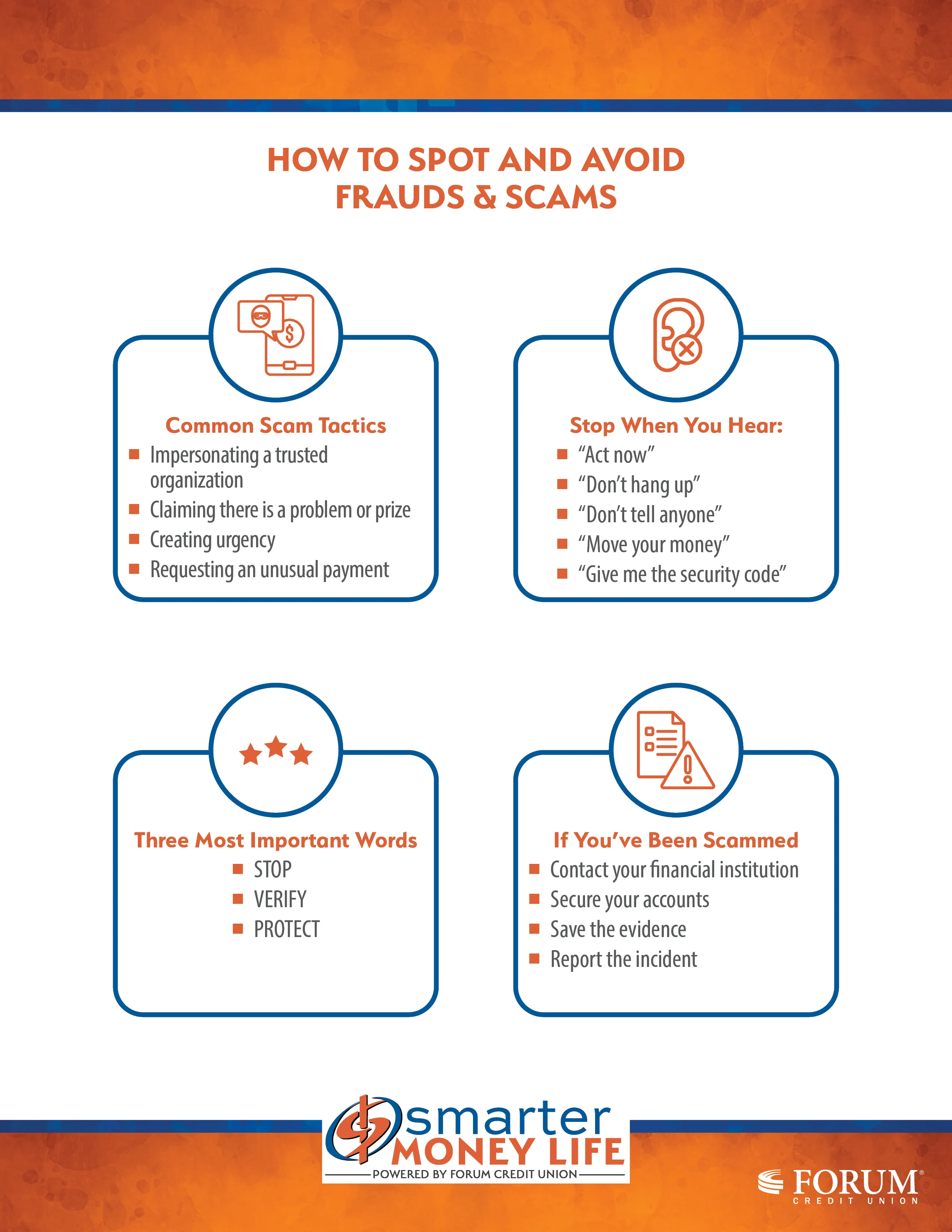
Scams are becoming more convincing, showing up through phone calls, text messages, emails, social media, and even QR codes. How can we recognize scams and protect our money and personal information? Spotting scams is getting harder and will become more challenging, but there are several ways to protect ourselves from fraud.
Common Scams to Watch for Right Now
The stories change, but most scams follow a similar pattern. Someone may pretend to be your bank, a government agency, a delivery company, a familiar business, or even a family member. They might say there is suspicious activity on your account, an unpaid bill, an undelivered package, or an emergency involving someone you care about. Other scams include fake shopping sites, fraudulent social media ads, phishing emails, suspicious texts, and QR codes linking to fake websites. The biggest thing to remember is this: Scammers want to create an emotional reaction before you have time to think. That emotion might be fear, excitement, urgency, or even the desire to help someone.
Red Flags That Signal a Scam
First, watch for pressure. If someone says you must act right now, stay on the phone, keep the situation secret, or move your money immediately, stop. Second, be suspicious of unusual payment instructions. Legitimate organizations generally will not demand payment through gift cards, cryptocurrency, wire transfers, or a payment app. Third, never trust caller ID by itself. Scammers can spoof a phone number or slightly alter an email address or website to make the communication appear legitimate. And finally, never give someone your password, PIN, or one-time security code. A scammer may pretend to stop fraud to get the security code needed to access your account. If the message creates urgency and asks for money or information, pause before doing anything.
Stop. Verify. Protect.: Handling Suspicious Calls, Texts, and Emails
Stop: Don’t click the link, open the attachment, scan the QR code, or respond immediately.
Verify: Contact the company using a trusted source. For example, if the message claims to be from your financial institution, use the phone number on the back of your debit or credit card, inside the official mobile app, or on a statement. Do not use the phone number or link provided in the suspicious message. This verification approach is also recommended by the Federal Bureau of Investigation.
Protect: Use strong, unique passwords and turn on multifactor authentication whenever it is available. Also, set up alerts for transactions, password changes, and new account activity. And when possible, talk to someone you trust. Scammers want to isolate you. A quick conversation can help you slow down and recognize something that doesn’t feel right.
What to Do If You’ve Been Scammed
Act quickly, but don’t panic and don’t be embarrassed. Anyone can be targeted. First, contact your financial institution immediately. Ask whether a payment can be stopped, a card can be blocked, or an account needs to be secured. Second, change affected passwords, starting with your email and financial accounts. If you reused the same password elsewhere, change it there too. Third, document what happened. Save text messages, emails, phone numbers, website addresses, receipts, and transaction details. Most importantly, speak up. Reporting the scam can help protect you and may prevent someone else from becoming the next victim.