
Rethinking Financial Risk
10/28/2026
Quick Summary: Financial risk isn't something to avoid entirely; it's a tool for building wealth. Learn why playing it too safe can cost you, how your time horizon affects the amount of risk you can take, how to tell good financial risks from bad ones, and simple steps cautious savers can take to start investing with confidence.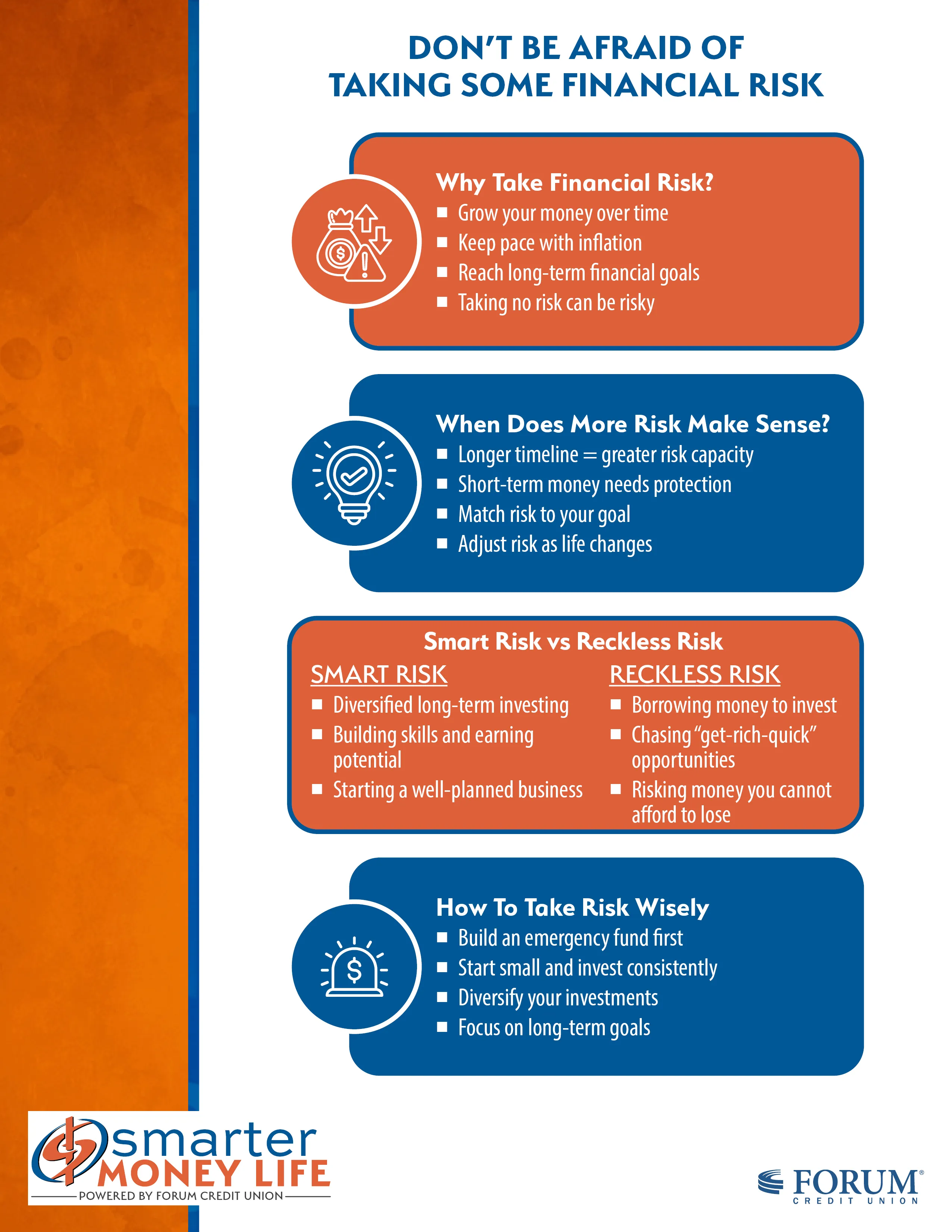
Most people hear the word "risk" and think it's something to avoid, but is that always true? Not at all. In fact, some level of financial risk is necessary if you want to build wealth. The key isn't avoiding risk, it's understanding it and taking the right risks at the right time.
The Hidden Cost of Playing It Safe
Why is taking financial risk important?
Avoiding all risk can carry risks of its own. If all your money sits in a basic savings account, inflation can slowly reduce its purchasing power over time. Taking calculated risks, like investing in a diversified portfolio of stocks and bonds, gives your money the opportunity to grow faster and help you reach long-term goals such as retirement, buying a home, or paying for college. The biggest financial mistake is often taking no risk at all.
How Your Time Horizon Shapes Risk
When does it make sense for someone to take on more financial risk?
Generally, the longer your time horizon, the more risk you can afford to take. Someone in their 20s saving for retirement has decades to ride out market ups and downs. That's very different from someone who needs that money next year for a down payment or retirement income. Time is one of the biggest factors in determining how much risk makes sense.
Smart Risks vs. Risky Moves
What are examples of good financial risks versus bad financial risks?
A good financial risk is one that has a reasonable chance of improving your future. Investing regularly for retirement, starting a business, or going back to school to increase your earning potential can all be smart risks. A bad risk is one where the downside could seriously harm your finances, like borrowing money to speculate on investments, chasing get-rich-quick schemes, or investing money you can't afford to lose.
Building Confidence as a Cautious Investor
What's the best way for someone who is naturally cautious to get comfortable taking financial risk?
Start small and have a plan. Build an emergency fund first so you have a safety net. Then begin investing consistently, even if it's only a modest amount each month. Diversify your investments and focus on your long-term goals instead of short-term market headlines. Remember, financial success isn't about taking reckless risks. It's about taking smart, informed risks that align with your goals. The goal isn't to avoid risk. The goal is to understand it, manage it, and use it as a tool to build the future you want. Sometimes the biggest risk isn't taking too much risk. It's taking none at all.