
Smart Steps for a Financial Reset
08/20/2026
Quick Summary: A financial reset starts with understanding where your money is going, tackling high-interest debt, and building habits that support long-term financial security. By reviewing spending, cutting unnecessary expenses, and automating savings, you can turn short-term changes into lasting financial progress.
Sometimes small money tweaks aren't enough. Whether you've accumulated debt, fallen behind on savings, or simply feel stuck financially, it may be time for a financial reset. These moves may require some short-term sacrifice, but they can dramatically improve your financial life for years to come.
Signs You Need a Financial Reset
How do you know when it's time for a financial overhaul instead of just making small adjustments?
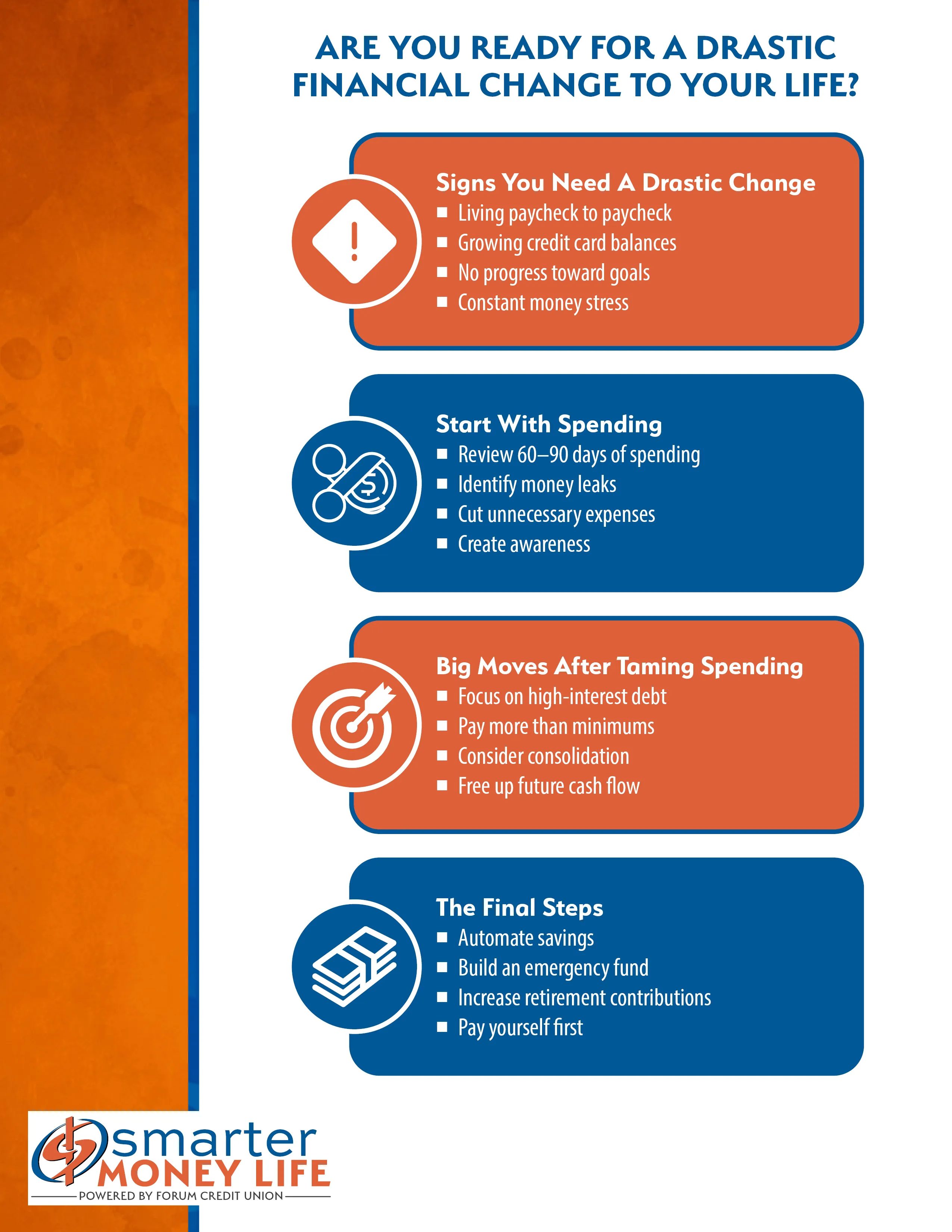
A financial overhaul is usually needed when financial stress has become a daily part of life. Maybe you're carrying high-interest debt, living paycheck to paycheck, relying on credit cards to make ends meet, or you've stopped making progress toward important goals. The good news is that recognizing the problem is often the hardest step. Once you decide that your current approach isn't working, you can start making meaningful changes that dramatically improve your financial future.
Know Where Your Money is Going
What's the first move someone should make if they need a financial reset?
You need to get brutally honest about where your money is going. Pull up your bank statements and credit card statements from the last 60 to 90 days and categorize every dollar spent. Most people are surprised by how much they're spending on convenience purchases, subscriptions, dining out, and impulse buys. Before you can fix your finances, you must understand them. This exercise creates a clear picture of what's helping your financial future—and what's holding it back.
Focus on Debt That Holds You Back
After reviewing spending, what's the next big move?
Attack high-interest debt aggressively. High-interest credit card debt can be one of the biggest obstacles to financial progress because so much of your paycheck goes toward interest instead of building wealth. Consider using strategies like debt consolidation, balance transfers when appropriate, or the debt snowball method. Every dollar you free from debt payments creates more room for savings, investing, and future opportunities.
Automate Your Financial Future
What's the final step that can truly change someone's financial life?
Start directing money toward your future automatically. Once you've cut expenses and reduced debt, automate savings and retirement contributions. People who wait until the end of the month to save often find there's nothing left. Even if you're starting small, consistency matters. When saving happens automatically, you're building financial security without having to make the decision every month. That's when a financial overhaul becomes a financial transformation.
For personalized help with a financial reset, FORUM offers Financial Coaching. Click here to learn more.