
Stress Less, Save Smarter
09/03/2026
Quick Summary: Learn simple ways to reduce financial stress, manage your money with more confidence, and build smarter habits through budgeting, saving, and small financial steps.
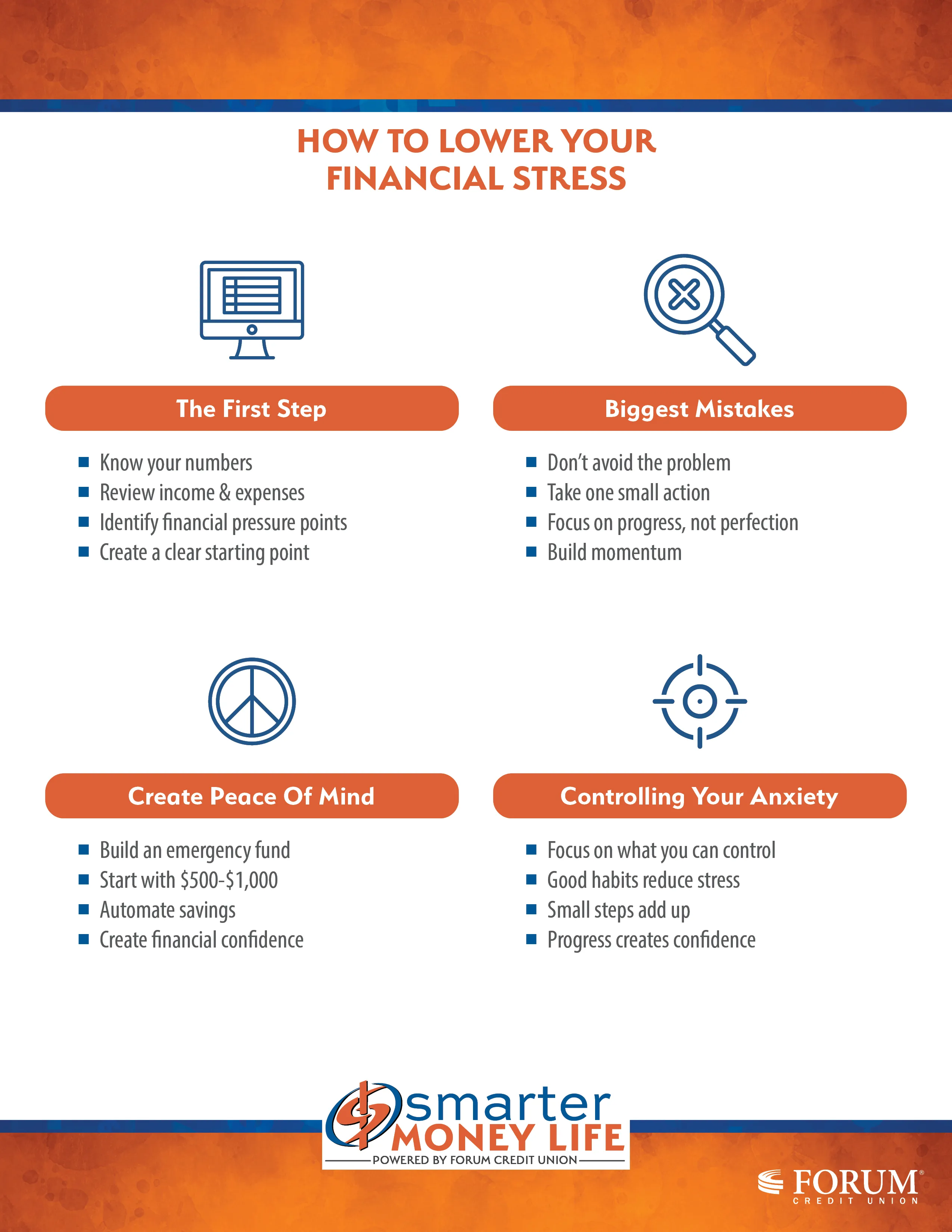
Money is one of the biggest sources of stress for many Americans. Between rising costs, debt, and uncertainty about the future, it's easy to feel overwhelmed. Financial stress doesn't disappear overnight, but taking small, consistent actions can help you regain control and build confidence.
Start with Financial Clarity
Many people feel stressed about money right now. What's the first step to lowering financial stress?
The first step is getting clarity. Financial stress often comes from uncertainty. Take 30 minutes to review your income, bills, debt, and savings. You don't need a complicated spreadsheet. Just knowing where your money is going can help you feel more in control. When you replace uncertainty with information, your stress level often drops immediately.
Take One Small Step
What's one mistake people make when they're feeling financially overwhelmed?
Many people avoid looking at their finances because they're afraid of what they'll find. Unfortunately, ignoring the problem usually makes the stress worse. Instead, focus on one small action. Maybe it's calling a creditor, creating a basic budget, or setting up an automatic transfer to savings. Small wins create momentum and help you feel like you're moving forward.
Build a Financial Safety Net
How can saving money help reduce stress, even when budgets are tight?
Having an emergency fund creates peace of mind. Even a small cushion can make a big difference when unexpected expenses happen. Start with a goal of saving $500 to $1,000. Set up automatic transfers, even if it's only $10 or $20 per paycheck. The amount matters less than building the habit and knowing you have a backup plan.
Focus on What You Can Control
What's your best advice for someone who feels anxious about their financial future?
Focus on what you can control today. You can't control inflation, interest rates, or the economy, but you can control your spending, saving, and financial habits. Every good decision you make today helps create a stronger future. Financial well-being isn't about being perfect. It's about making consistent progress one step at a time.