
When It Makes Sense to Break a Financial Rule
10/08/2026
Quick Summary: Common financial rules are useful starting points, but they do not fit every situation. Building emergency savings gradually, considering a lower home down payment, or investing while paying down certain debts can make sense when the risks are understood, the full costs are affordable, and a backup plan is in place.
We hear financial rules all the time: save six months of expenses, put 20 percent down on a house, pay off every debt before investing. But are those rules always right for everyone? Does it ever make sense to break a financial rule?
Build Emergency Savings in Stages
Let’s start with emergency savings. We often hear that everyone needs three to six months of expenses saved. Is it ever okay to have less?
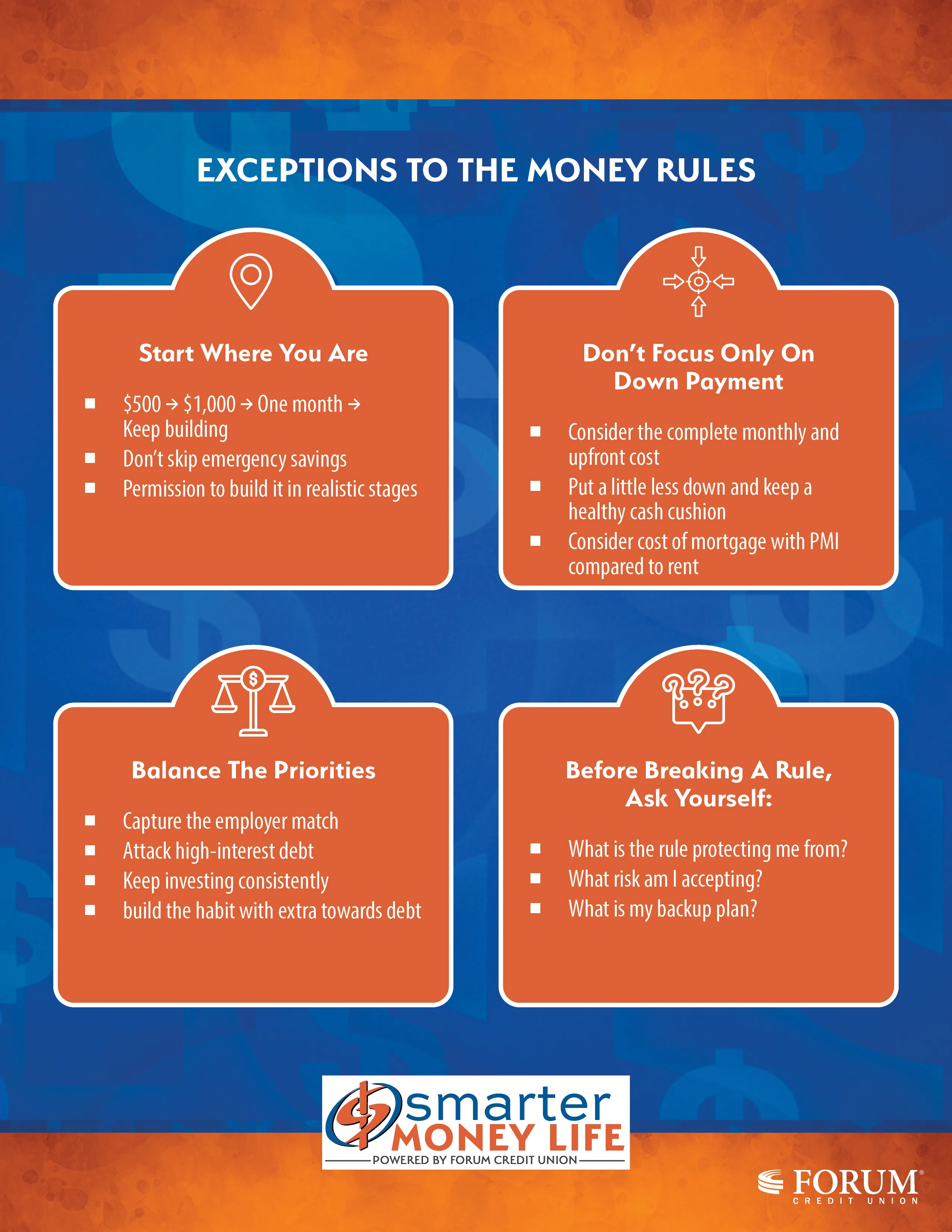
Absolutely, especially when you’re just getting started. Three to six months of expenses is a great long-term target, but it can feel overwhelming if you’re living paycheck to paycheck or paying down expensive debt. The first goal might be $500, then $1,000, and then one month of essential expenses. Even a smaller emergency fund can help you handle a car repair, medical bill, or broken appliance without immediately turning to a credit card. The amount someone needs also depends on their situation. A household with one income, variable pay, or greater job uncertainty may need a larger cushion than a household with two stable incomes.
Look Beyond the 20% Down Payment
Another familiar rule is that you should put 20 percent down when buying a home. Should people wait until they have the full 20 percent?
Not necessarily. Putting 20 percent down can reduce the amount you borrow and may help you avoid mortgage insurance, but waiting several more years is not automatically the best choice. Some buyers may qualify for a mortgage with a lower down payment. The real question is whether the entire purchase is affordable. That includes the monthly payment, property taxes, homeowners’ insurance, possible mortgage insurance, maintenance, closing costs, and an emergency cushion. There are several options to put less down and having private mortgage insurance sometimes is still less expensive than renting and you are at least building equity in your home.
Balance Debt Repayment and Investing
What about the rule that you should pay off all your debt before you begin investing?
That is another rule with an important exception. If your employer offers a retirement plan match, contributing enough to receive the full match may make sense while you’re paying down debt. Otherwise, you could be leaving part of your compensation on the table. After that, look at the type and cost of the debt. High-interest credit-card debt generally deserves urgent attention. A lower-rate mortgage, auto loan, or student loan may allow more room to balance debt repayment with long-term investing.
Know When an Exception Makes Sense
If financial rules aren’t one-size-fits-all, how can viewers decide when an exception is actually smart?
I would ask three questions:
First, what is the rule trying to protect me from?
The emergency-fund rule protects you from unexpected expenses. The 20-percent-down rule protects you from borrowing too much.
Second, what risk am I accepting by making an exception?
Putting less down may mean a larger payment or mortgage insurance. Keeping a smaller emergency fund may leave you more exposed if your income suddenly changes.
Third, do I have a backup plan?
Know where the money would come from if something went wrong. An exception should be a thoughtful decision, not permission to ignore the risk.