
Budgeting Without a Budget
09/29/2026
Quick Summary: Learn how to manage money without a traditional budget using simple strategies such as a weekly spending allowance, spending limits, and moving leftover money to savings or debt.
If you've ever tried budgeting and given up after a few weeks, you're definitely not alone. For many people, tracking every dollar feels overwhelming, time-consuming, and frankly, not very fun. It is possible to take control of your money without a traditional budget if you are willing to be creative with what might be a better option for your situation.
A Simpler Way to Manage Your Money
So, is it possible to take control of your money without a traditional budget?
Absolutely. A lot of people think the only way to manage money is with spreadsheets and detailed spending categories, but that's simply not true. There are several easy strategies that can help you save more, spend more intentionally, and make progress toward your financial goals without tracking every purchase.
Set a Weekly Spending Allowance
What's one simple strategy for people who want to improve their finances without tracking every dollar?
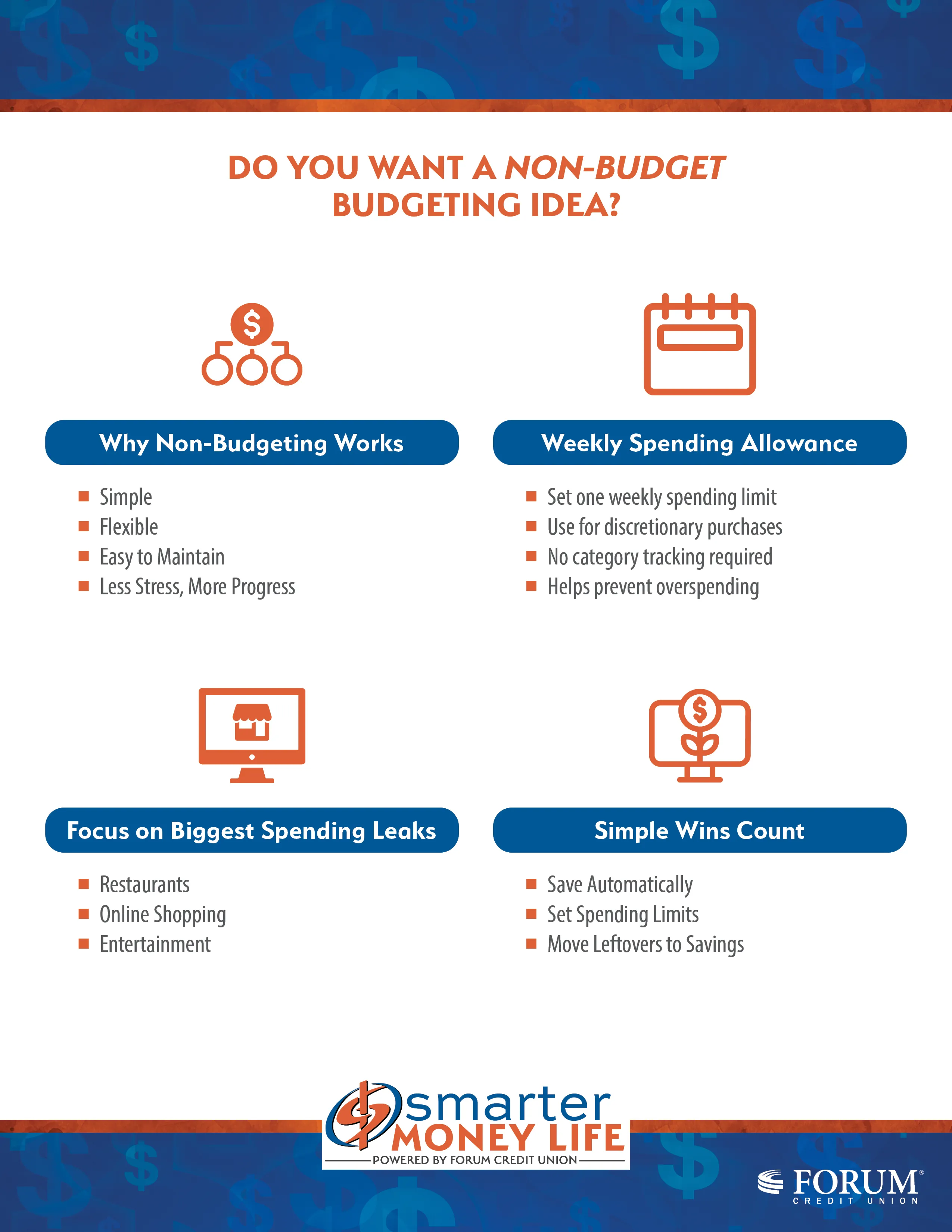
Try a Weekly Spending Allowance. After your bills, savings, and essentials are covered, decide how much money you can spend on things like dining out, entertainment, coffee, or impulse purchases each week. Maybe that's $75, maybe it's $150. Once it's gone, you're done spending until next week. It's simple because you're only tracking one number instead of dozens of categories.
Focus on Your Biggest Spending Leaks
What's another easy strategy that doesn't require tracking every expense?
Use spending guardrails instead of a traditional budget. For example, decide on one spending category that tends to get out of control, like dining out, online shopping, or entertainment, and set a monthly limit just for that area. Most people don't need to monitor every purchase. They simply need to manage the one or two categories that have the biggest impact on their finances.
Put Leftover Money to Work
What's one final tip for people who want to improve their finances without becoming a budget expert?
Try the "leftover method." At the end of each month, check what's left in your account after your bills are paid. Move a portion of that amount into savings or toward debt. You're still making financial progress without the daily work of budgeting. Remember, successful money management isn't about having the perfect budget. It's about creating simple habits that are easy to stick with over time.