
How to Save Money on Everyday Purchases
09/16/2026
Quick Summary: Learn how to save money on everyday purchases with simple strategies for groceries, subscriptions, recurring expenses, and impulse spending. These practical tips can help you stretch your budget and build healthier spending habits throughout the year.
Everything seems to cost more these days, from groceries and gas to streaming services and everyday household items. So how can people stretch their dollars a little further without feeling deprived? Small changes may not feel significant in the moment, but over time they can have a major impact on your financial health.
Why Your Money Doesn’t Stretch as Far
A lot of people feel like they're spending more but getting less. Why does it seem like our money isn't stretching as far as it used to?
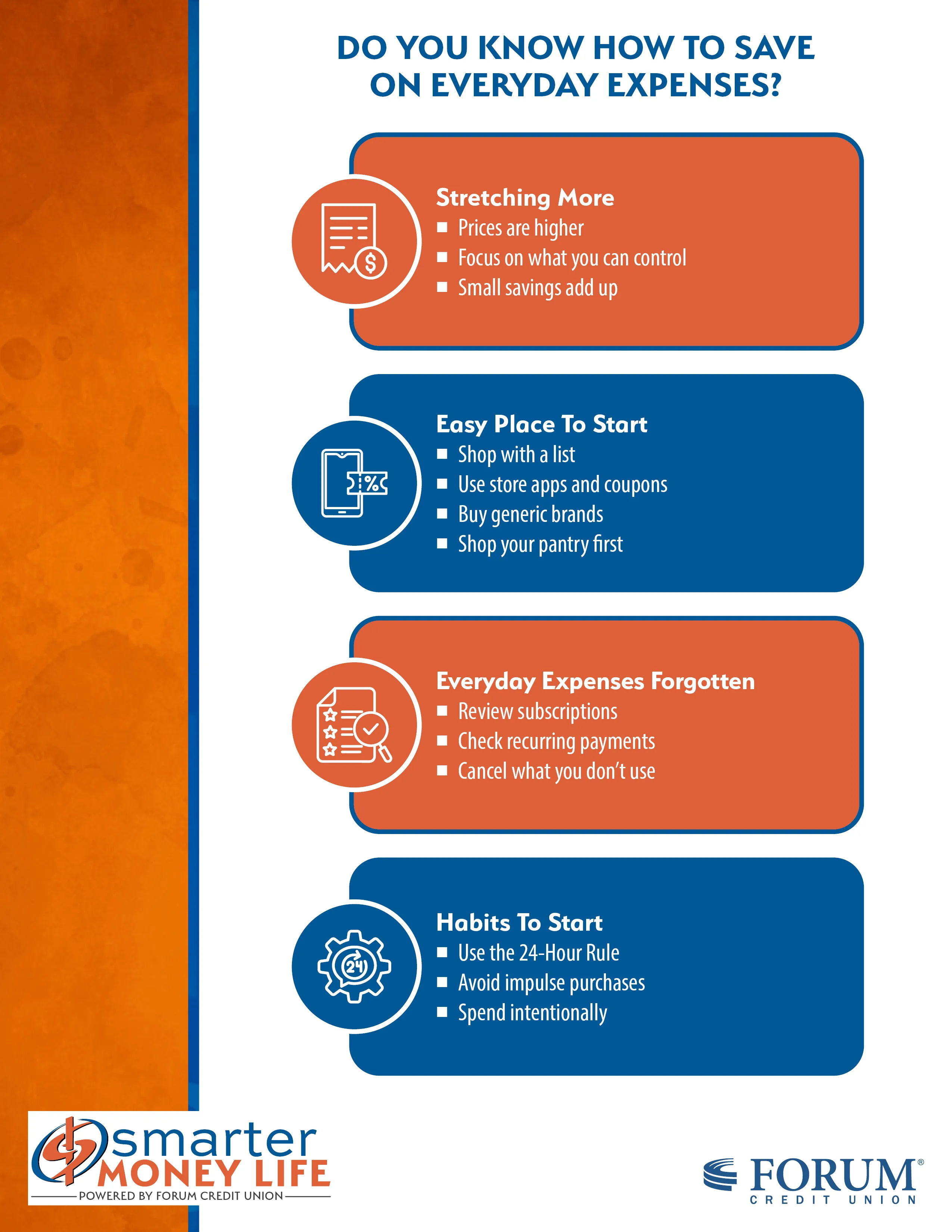
You're definitely not imagining it. Prices on everyday expenses have increased over the last few years, and even when inflation slows down, prices don't usually go back down. The good news is that while we can't control prices, we can control how we spend. One of the biggest mistakes I see is people treating every purchase as fixed. Whether it's groceries, insurance, subscriptions, or even utilities, there are often opportunities to save if you're willing to spend a few minutes reviewing your spending habits.
Start Saving at the Grocery Store
If someone wants to save money this week, what's the easiest place to start?
Start with your grocery budget. Food is one of the biggest household expenses, and it's also one of the easiest places to find savings. Before you shop, make a list and stick to it. Check store apps for coupons, compare generic brands to name brands, and avoid shopping when you're hungry. I also encourage people to look at what they already have at home before heading to the store. Even saving $20 or $30 a week on groceries can add up to more than $1,000 over the course of a year. Explore FORUM’s savings account options to help put those savings to work.
Review Subscriptions and Recurring Expenses
What are some everyday expenses people may be overlooking?
Subscriptions are big ones. Many people are paying for streaming services, apps, memberships, or monthly deliveries they rarely use. A quick subscription audit can be eye-opening. Look through your bank and credit card statements from the last two months and ask yourself one question: "Would I sign up for this again today?" If the answer is no, cancel it. Another area is recurring purchases. Sometimes we buy things out of habit rather than necessity. FORUM’s financial resources and tools can help you review your spending and plan your next steps.
Build Better Spending Habits
What's one habit you can start today that will help you save consistently throughout the year?
My favorite habit is the 24-hour rule. Anytime you're considering a non-essential purchase, wait 24 hours before buying it. That pause helps separate wants from needs and reduces impulse spending. I've seen people save hundreds, even thousands, of dollars each year simply by giving themselves time to think before clicking "Buy Now." The goal isn't to stop spending money. It's making sure your spending aligns with what's most important to you. For personalized guidance, learn more about FORUM’s financial coaching.