
Staying Safe in a Connected World
06/11/2026
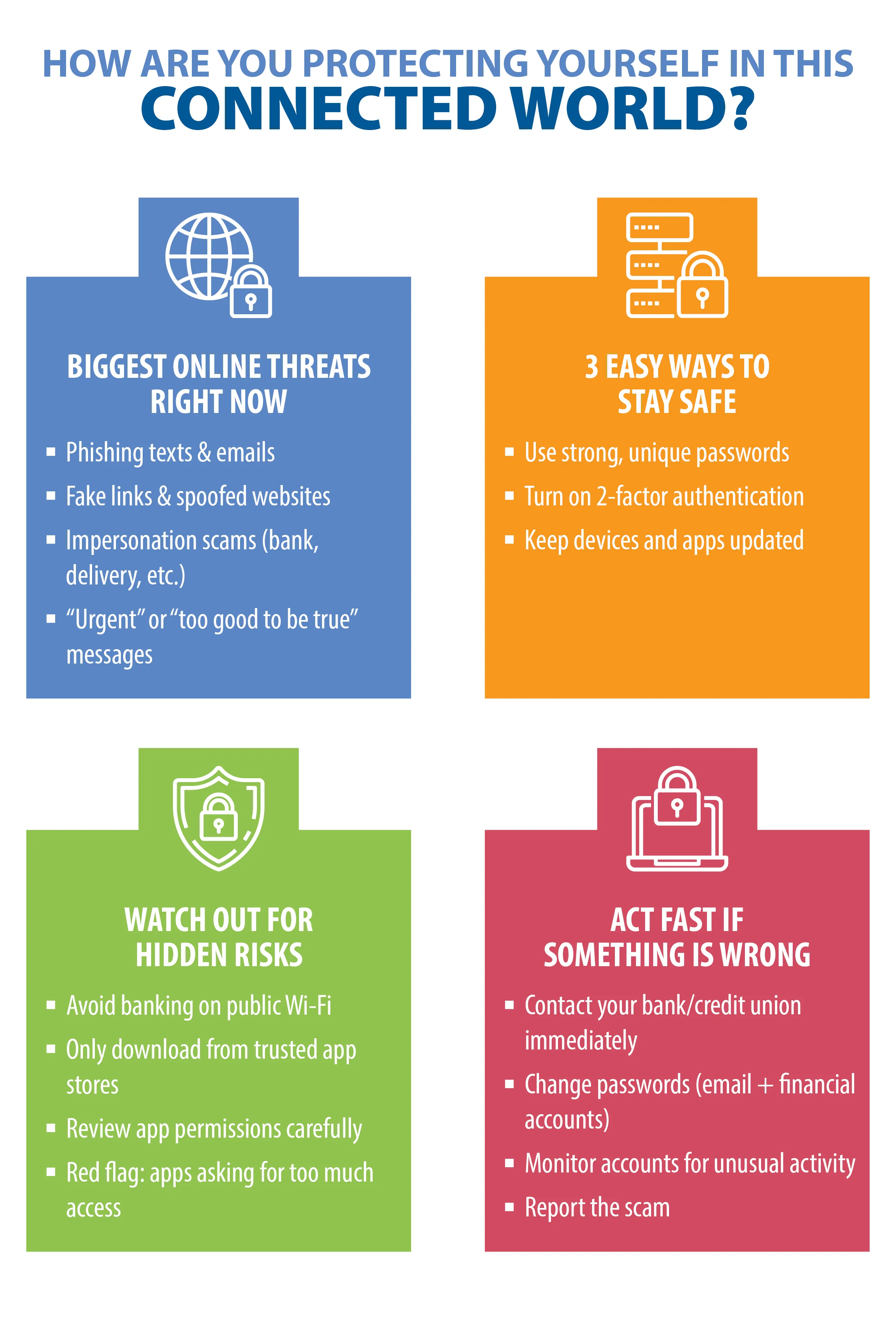
In today’s world, everything is connected—our phones, our apps, our bank accounts—and while that makes life easier, it also creates more opportunities for scammers. From fake texts and emails to fraudulent links and impersonation schemes, the threats are evolving quickly. The good news is, protecting yourself doesn’t have to be complicated. With a few simple habits and a little awareness, you can stay one step ahead and keep your personal and financial information safe.
The Most Common Digital Threats Right Now
We hear all the time about scams and data breaches—what’s the biggest risk people face right now?
Everything from our phones and apps to our bank accounts is connected. And scammers are taking advantage of that. The most common threats we’re seeing are phishing texts and emails, fake links, and even people pretending to be your bank or a delivery service. The key thing to remember is this: if something feels urgent or too good to be true, slow down. That pause alone can prevent most fraud attempts.
Three Simple Ways to Stay Secure
So what are a few simple things individuals can do right away to protect themselves?
The good news is you don’t have to be a tech expert to stay safe. A few basics go a long way: First, use strong, unique passwords—don’t reuse the same one everywhere. Second, turn on two-factor authentication wherever you can. And third, keep your devices updated—those updates fix security gaps. If you do just those three things, you’re already ahead of most people.
Stay Smart About Wi‑Fi and App Safety
Are public Wi-Fi and apps still risky?
They can be. Public Wi-Fi—like at airports or coffee shops—is convenient, but it’s not always secure. Avoid logging into financial accounts when you’re on those networks. And with apps, be mindful of what you download and what permissions you allow. If a flashlight app wants access to your contacts, that’s a red flag. Stick to trusted app stores and review those permissions before you click “accept.”
First Steps After a Scam or Hack
If someone thinks they’ve been hacked or scammed, what should they do first?
Act fast—that’s the most important thing. If it’s financial, contact your bank or credit union immediately so they can lock things down. Change your passwords right away, especially for email and financial accounts. And don’t be embarrassed—this happens to a lot of people. The sooner you report it, the better chance you have of limiting the damage.
For more online security recommendations, visit FORUM’s Safety Tips page. In addition, you may report any suspected fraud by talking with a FORUM representative, emailing us at FraudPrevention@forumcu.com or calling 317.558.6299.