
Understanding and Implementing Financial Sayings
05/13/2026
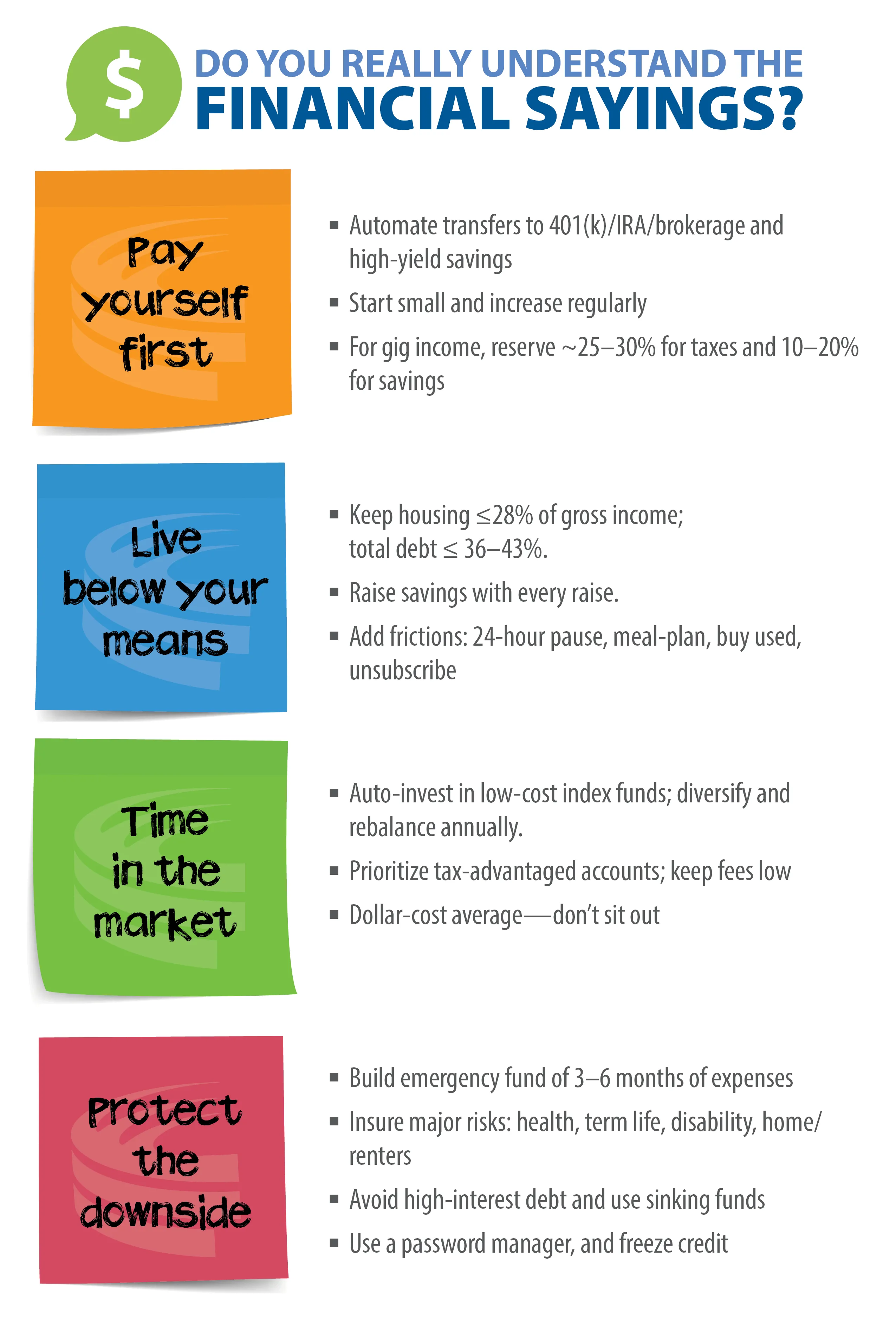
Whether you’re just starting out or leveling up your money game, four simple rules can change your trajectory: pay yourself first, live below your means, let time in the market do the heavy lifting, and protect the downside. If you follow these, you will know what to automate, where to trim, how to invest without chasing headlines, and the safeguards that keep setbacks from becoming crises.
Pay Yourself First: A Simple Way to Save Money
“Pay yourself first” sounds simple. What does it look like in practice?
Automate it. Direct a slice of every paycheck to savings and investments before bills hit. Start with your 401(k)—at least up to the company match—then automate transfers to a Roth IRA or brokerage, plus a high‑yield savings account for near‑term goals. If 15–20% feels big, begin at 1–5% and bump it each quarter. Gig workers: park 25–30% for taxes and 10–20% for savings in separate accounts. Make it invisible, make it automatic, and you’ll never “miss” the money.
How to Live Below Your Means
“Live below your means” is a mantra. How do people actually do it?
Cap fixed costs so you create a healthy gap. Aim for housing under ~28% of gross income and keep total debt payments under ~36–43%. Use a simple rule like 50/30/20 or 60/20/20 to guide spending and saving. Fight lifestyle creep: when you get a raise, increase savings first. Try a 24‑hour pause on non‑essentials, meal‑plan three dinners a week, buy used for fast‑depreciating items, and unsubscribe from promo emails. These small barriers can help you spend more intentionally.
Time in the Market Matters
“Time in the market beats timing the market.” So how should viewers invest?
Go automatic and low‑cost. Set monthly contributions to broad index funds, prioritize tax‑advantaged accounts, and keep fees for management as low as possible if you can. Diversify across U.S./international stocks and add bonds based on your risk and time horizon. Rebalance annually or at set thresholds. Avoid headline chasing—stick to the plan through ups and downs. Nervous with a lump sum? Phase it in over a few months, but don’t sit on the sidelines forever; compounding needs time.
How to Protect Your Finances
"Protect the downside" is about defense. What belongs on that checklist?
Build a cash buffer—3–6 months of expenses, or 9–12 if income is variable—in a high‑yield savings account. Insure the big risks: health, term life if someone relies on your income, disability, renters/home, and consider an umbrella policy. Avoid high‑interest debt; use sinking funds for known costs like travel or car repairs. Use a password manager. Freeze your credit to block fraud.
If you're looking for additional tips, FORUM offers Financial Coaching. Learn more.