
Why One Emergency Fund Might Not Be Enough
09/09/2026
Quick Summary: Learn why one emergency fund may not be enough and how creating separate savings buckets for short-term expenses, income interruptions, and unexpected costs can help you stay organized, reduce financial stress, and feel more prepared for life’s surprises.
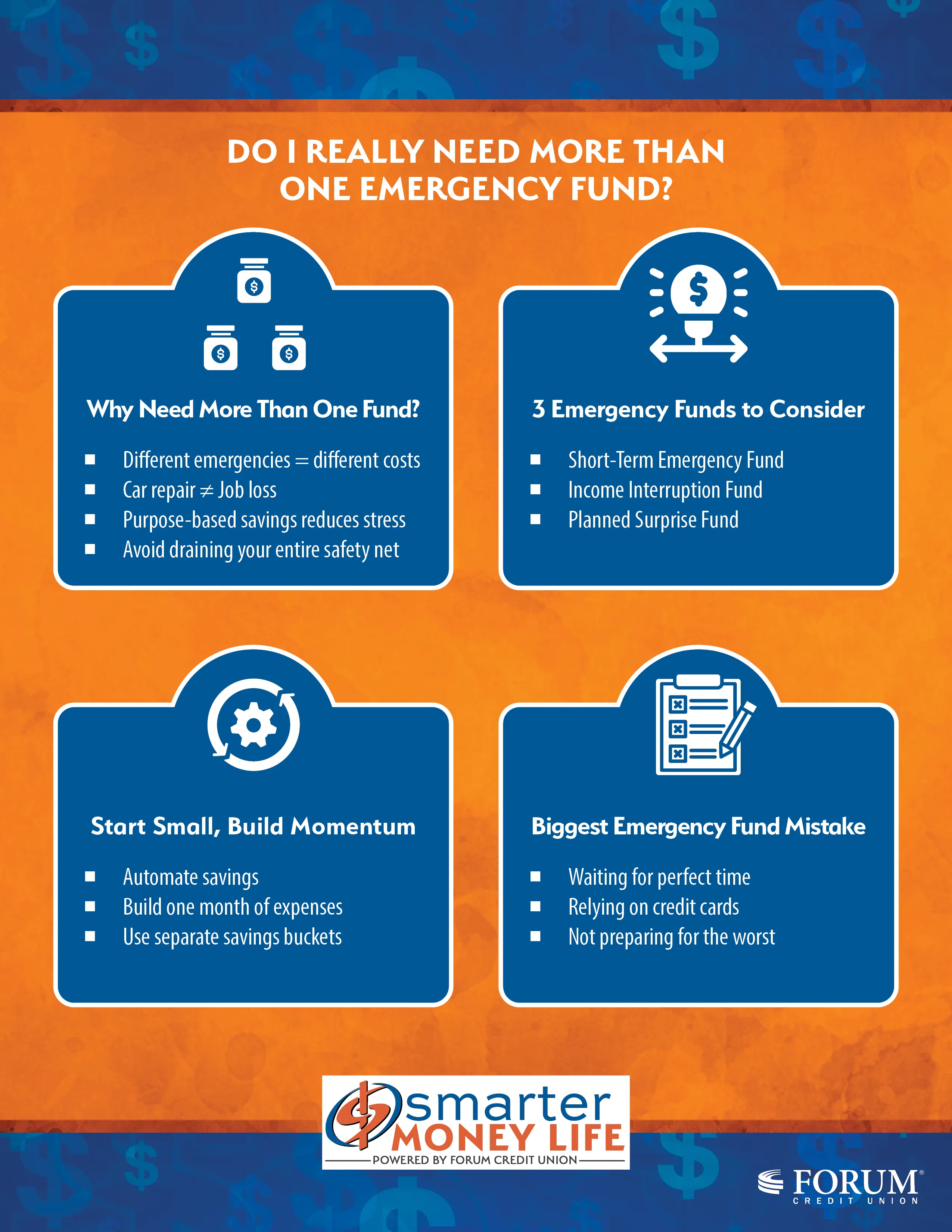
Building an emergency fund is one of the smartest money habits you can create, but the real key is understanding that not every emergency looks the same. A flat tire, a broken appliance, a medical bill, or a sudden loss of income can all affect your budget in very different ways. That is why one savings account may not be enough. Creating a few purpose-based emergency funds can help you feel more prepared, organized, and less stressed.
Rethink Your Rainy Day Fund
When people hear "emergency fund," they think of one savings account. Do you believe one is enough?
It is not. Most financial experts recommend having an emergency fund, but not all emergencies are the same. A broken water heater, a job loss, and unexpected vet bills are very different situations. Instead of one giant savings goal that feels overwhelming, try creating several smaller emergency funds with specific purposes. It makes saving more manageable and helps you avoid draining your entire safety net for a relatively minor expense.
Your Backup Plan, Built Better
So what are some examples of emergency funds people should consider?
I recommend starting with three. First, a short-term emergency fund for things like car repairs, home repairs, or medical deductibles. Second, an income interruption fund that could cover several months of essential expenses if you lose your job or your income drops. Third, a planned surprise fund for expenses that aren't really emergencies but still catch us off guard, like replacing appliances, pet expenses, or unexpected travel to help a family member. Separating these goals can make your finances much more organized.
Build Momentum, Not Pressure
That sounds like a lot of money to save. How can someone get started without feeling overwhelmed?
Start small and prioritize. Focus first on building a short-term emergency fund of $500 to $1,000. Once that's in place, gradually work toward covering one month of essential expenses, then eventually three to six months. Use separate savings buckets or savings accounts if your financial institution offers them. Tools like savings calculators and online banking can also help you track progress and stay organized. When people see progress toward specific goals, they're often more motivated to keep saving.
Skip the Perfect Timing
What's the biggest mistake people make when it comes to emergency savings?
Waiting for the "perfect time" to start. Emergencies don't check our calendars before they happen. Even saving $20 or $50 per paycheck can add up surprisingly fast. The goal isn't perfection. It's building a system that helps you handle life's surprises without relying on credit cards or loans. If you want help creating a plan, financial coaching can be a helpful place to start. The more prepared you are, the less stressful those unexpected moments become.