
Why We Overspend
09/23/2026
Quick Summary: Learn why people overspend, recognize common spending triggers, and curb impulse purchases with practical strategies like the 24-hour rule, tracking expenses, and aligning spending with financial goals.
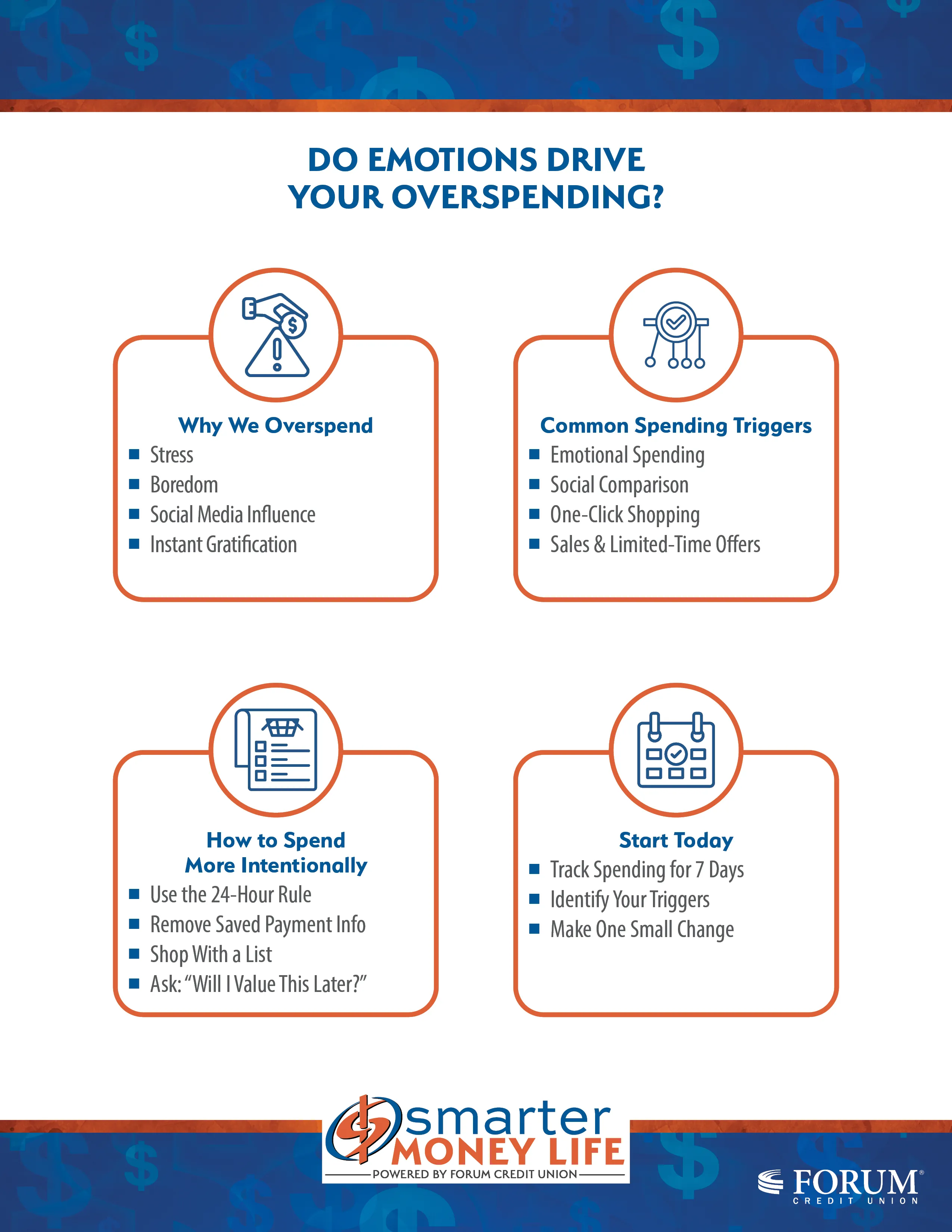
We've all had that moment. You walk into a store for one thing and come out with five. Or maybe you're scrolling online, see a flash sale, and before you know it, there's a package on the way to your house. The reality is that most of us don't overspend because we're bad with money. In fact, many people struggle with impulse purchases and spending habits that don't always align with their goals. The reason is that spending is often driven more by psychology than math.
Why We Overspend Despite Knowing Better
Why do people overspend even when they know they shouldn't?
Most overspending isn't a money problem, it's a behavior problem. Our brains are wired to seek rewards, and spending money can give us a quick emotional boost. Whether we're stressed, bored, celebrating, or scrolling social media, purchases often make us feel good in the moment. The challenge is that the emotional reward happens immediately, while the financial consequences show up later. That's why even smart, successful people can find themselves overspending.
Common Spending Triggers
What are some common spending triggers people should watch for?
I like to tell people to become detectives of their own spending habits. Some of the biggest triggers are emotional spending, convenience spending, and comparison spending. Social media makes it easy to see vacations, cars, clothes, and lifestyles that can make us feel like we're falling behind. Another big trigger is the ease of digital payments. When we tap a card or click a button online, we don't feel the pain of spending the same way we do when handing over cash. If you can identify your personal triggers, you're already halfway to changing the habit.
How to Stop Overspending
What are some practical ways to stop overspending?
The good news is you don't have to completely stop spending money. One simple strategy is the 24-hour rule. If it's not a necessity, wait a day before buying it. You'll be surprised how often the urge disappears. Another tip is to remove saved payment information from shopping sites. Adding a little friction gives your brain time to think. And before making a purchase, ask yourself one question: "Will I still be happy I bought this a month from now?" That pause can prevent a lot of impulse purchases.
Start Building Better Spending Habits
If someone wants to improve their spending habits starting today, what's the first step?
Start by tracking your spending for the next seven days without judging yourself. Most people are shocked by where their money actually goes. Awareness creates change. Look for patterns, not perfection. Maybe it's daily coffee runs, online impulse buys, or food delivery. Once you identify the habit, you can make small adjustments that add up over time. A FORUM Account that can help you do this is the 52-Week Money Challenge. By saving money incrementally through the year, you'll be entered to win a cash prize! Remember, building wealth isn't about never spending money. It's about making sure your spending aligns with what matters most to you.